Showing posts with label Norwegian. Show all posts

Tuesday, August 10, 2021

Part III of Otto's Restaurant: Uff Da!

 Those of you who have not heard this phrase are no doubt wondering what "uff da" means.  So... here's my definition...
Uff Da:  a Norwegian interjection   pronunciation: (oof-duh)   
Uff da denotes disappointment, irritation, exhaustion, dismay, anger, disgust, etc.
Examples:  It's 20° below zero. Uff da! 
                   I burned the lefse... uff da!
                   Mud on the kitchen floor. Uff da!!!

Cold work sledding a huge log past Evenson's restaurant... uff da!

Otto and Henrietta in the restaurant

Over the 40 years that Otto ran a restaurant, there were, of course, some uff da moments. How could it be avoided? Here are a few uff da stories:

Grandpa loved sports, especially baseball.  He supported the town baseball team, and signed my dad up as the batboy. He attended Luther College games if he could, and he listened on the radio to hear big league games. One day while listening on the radio, intent on the game, he was also pealing onions in the restaurant. I can imagine him now, dabbing his blue eyes on a white handkerchief while he worked, his mind totally focused on the game. Maybe the onions were meant to flavor the soup or gravy,  who knows? In any event, Otto lost track of what he was doing and put them into the coffee urn. Yes, it was full of coffee. Uff da!!! Probably the onions were salvaged, but I bet the coffee had to go.

Otto is the team sponsor, my dad Emil is the batboy


Creamers from Otto's restaurant... and a HUGE tip!

Do you remember the old time pressure cookers? They saved a lot of cooking time, so Otto and Henrietta got one for the restaurant kitchen. The gauge at the top showed the amount of pressure inside, and you had to pay close attention to it or there was big T-R-O-U-B-L-E. One day, apparently someone tried to open it too soon, and steaming hot chicken parts went flying all over the place. Uff da! Luckily, no one was hurt. But apparently some chicken bones were permanently embedded in the fancy tin ceiling. This story deserves two uff das!


The restaurant was open 7 days a week. I'm reminded of a Garrison Keillor saying "My people are not paradise people." No kidding! It must have been exhausting. So one day, Grandma Henrietta got up and opened the restaurant alone to make breakfast for the road crew. Maybe this happened about the time the Rovrud guys were putting blacktop on the roads. The road crew was important to the community, and the crew members needed their breakfast before a hard day of work. So Henrietta made and served breakfast to the crew and they went on their way. Later, Otto joined her at the restaurant and was shocked to see that the back of her dress was hitched up in her girdle. Now, Grandma had a good sense of humor, but still... I imagine she was mortified. They had always run a respectable business. And strangely enough, no one in the road crew had said a thing! Was it possible they didn't notice? Were they embarrassed? Respectful? Or was Grandma getting older and they felt sorry for her? Any way you look at it... uff da!!!  

Otto, Henrietta, my uncle Burnell and cousin Bill


Main Street in Spring Grove, unpaved, and Otto's Cafe 

The last story in this theme is a little colorful, a little hilarious. Consider yourself warned.  

Grandpa Otto was known to be generous, He would share food with those who were down and out. But... one day a woman came in demanding that he give her free food. Something about her brought out his bullheadedness... he didn't like her and he didn't like her rudeness. She continued to demand food. Otto told her that this was America, and we expected people to pay for food here. He refused her demands. She got angry, he held his stance. Before she left the restaurant, she unbuttoned her blouse, took out a breast and squirted milk at him. She was quite a distance from him, but she managed to spray him anyway! Otto was accosted with breast milk in his own restaurant! 

And that story, my friends, deserves an uff da! Or maybe more than one? I'm curious. How many would you give it?

Tusen takk for reading today. May these stories bring a smile.


Wednesday, March 24, 2021

Vær Så God... Tusen Takk!

Curious about the words above? Here's a translation:

"Vær så god" literally means "be so good" as in "be so good as to join me." It is an idiom often used to call everyone to the table, and would mean "here you go" or "dig in." I'm using it somewhat liberally in this post, with the emphasis on "join me." 

"Tusen takk" means "a thousand thanks." I heard "tusen takk" or "mange takk" over and over as a child. If my parents visited at a friend's house, it was "tusen takk" as they left. "Mange takk" is "many thanks."

I'm sure that Otto and Henrietta used these words often in the restaurant. There was a certain pleasure and pride in offering hospitality, never mind the hard work. Otto spent most of his daylight hours at the restaurant. For a while, he even ran two restaurants on Main Street until a friend pointed out that Otto was competing with himself. Maybe that struck a chord because soon he was back to one restaurant.

Once her children were old enough, Henrietta went to help at the restaurant. I think everyone shared jobs there, but apparently she baked all the pies. In order to take care of household needs, she sometimes hired a woman to come to the house and sew for her. This beautiful quilt, passed down to me, is an example. 

I remember sleeping under this quilt as a child, especially when we had a full house. We think it was made by one of Grandma's seamstresses, perhaps a woman from the Fossum family.

This brings us to an early memory. My sister Marion remembers walking with Margaret, Emil Jr. and our cousin, Virginia Ike, from the restaurant to Otto and Henrietta's one evening when they were all quite young. They walked along the dirt alleyway, between big bushes and through scary shadows, and into Grandma and Grandpa's house. It was dark inside so they turned on a light, probably a single lightbulb in the ceiling, when they saw an old woman, unknown to them, come out of the pantry. Her hair was white, her gown was long and white, and she spoke a language they didn't understand. Maybe she was a ghost! The kids screamed and ran back to the restaurant.  Once they explained their fright and were calmed down, they found out that she was a seamstress, a friend to the family, hired to come and do some sewing for Grandma. Whew! Close call!!! 

Virginia Ike, Marion & Margaret play wedding.

My family had many reasons to say "mange takk" to Otto and Henrietta. During the depression, when my oldest siblings were small and my father was between jobs, our grandparents said "vær så god" and our family moved in with them. Several times my older siblings lived there, went to school in Spring Grove, ate at the restaurant, and slept in the upstairs of the big old house. They remember those days fondly, and surely we can't say "tusen takk" enough for the generous support of our family.

Three Brothers:
Jacob & Johanna...Otto & Henrietta... Edward & Ingen

Otto had three brothers who emigrated to the US, several seen in the photo above. Jacob and Johanna moved to North Dakota to pursue farming. Edward and Ingen lived in Spring Grove and raised ten children there. The tenth was a boy named Timan, which translates from Norwegian to "tenth man." I rather love that bit of the story, especially since our family had ten kids also. 

Hans Evenson

Otto's brother Hans went to prospect for gold in the Klondike and, like many others, he came back penniless and in poor health. Apparently Otto again said "vær så god" because Hans lived with Otto and Henrietta for a while, and would be seen in the restaurant.  When Hans died, Otto provided a gravestone by donating a portion of the marble countertop from the restaurant. 


You can still find it in the Trinity Cemetery in Spring Grove.

Mange tusen takk to Otto and Henrietta, for all their hard work and hospitality. And tusen takk to all who stop by to read about them. Much appreciated!


Thursday, December 31, 2020

Searching for Scandinavian Roots - Guest Author

Happy New Year! Today I'm sharing a post written by my brother, Eric Evenson, about his trip to Norway to learn about Otto Evenson's home and early years.


Searching for Scandinavian Roots by Eric Evenson

I have always been intrigued with the life story of my grandfather, Otto Evenson, who emigrated to the U.S. from Norway at the age of 15. Karen Eastlund has blogged about Otto and his restaurant. I was lucky enough to go to Norway to see where Otto lived and learn a little about his life there. This post will share some of that journey with you.

Otto was born in 1870 and immigrated to Minnesota in 1885. He was 84 when I was born, and I was 16 when he died. We visited my grandparents several times a year, but I never asked him about his youth. However, since I’m the youngest of ten children, I heard stories about Otto from older siblings. We knew the region of Norway that he came from, and we had contact with some distant relatives in Norway who had done some genealogy tracing.

In 2006 my oldest brother, Emil Jr., invited my wife, Karen Fell Evenson, and I to join him and his wife Judy on a trip to Norway. Emil is 25 years older than I and he and Judy had previously visited Norway, so they were experienced and welcome guides for us. Our plans included seeking Otto’s home and church.

After some initial stops in Norway, we made an easy drive from Lillehammer to the Toten District to meet Ole Grannum, our relative and guide to my grandpa’s original stomping grounds. Ole arranged to meet us at an auto service plaza in Gjovik, Norway. I expected a little station with one or two pumps, but it turned out to be a major truck stop, so while Emil, Judy, and Karen stretched their legs, I was sent to find Ole. I wondered how I would find someone I had never met, but halfway around the perimeter Ole walked up to me and said, “You must be Eric. You look just like all the Evensons.”  I was both shocked and happy. Ole joined the group, renewed his acquaintance with Emil, and we got underway.


Left to right: Eric, Ole Grannum, and Emil Jr.


Our first stop was the Hoff kirke, or Hoff Church, about 2 km northeast of the small town of Lena. This was the church that my Grandpa Otto attended, along with ancestors before him. He was baptized and confirmed at this church. It was so cool visiting this place that I can barely contain myself now in telling you about it. You can read about this church here.


 The Hoff Church


Door of the Hoff Church


We walked through the graveyard and talked about the customs of the day. My ancestors would not have been buried in the church cemetery since they were not landowners. The Stabo family, who owned the farm where my great grandfather worked and lived, were buried there however, and we found their graves. We don’t know where my relatives were buried. By 1884, my great grandparents did eventually amass enough funds to buy a small acreage called Evenstad. That would have been about the time that Otto was confirmed in the church, and just a year before he left for the U.S.


Inside the church the architecture was amazing. The altarpiece is dated 1664 and the baptismal font 1703. The same one that my grandpa and his siblings were baptized in! If you look closely, you can see that the font is held up by an angel with a dolphin peeking between his feet. On the walls was a gallery of all the pastors who served the church beginning in 1401… well before Luther’s reformation.
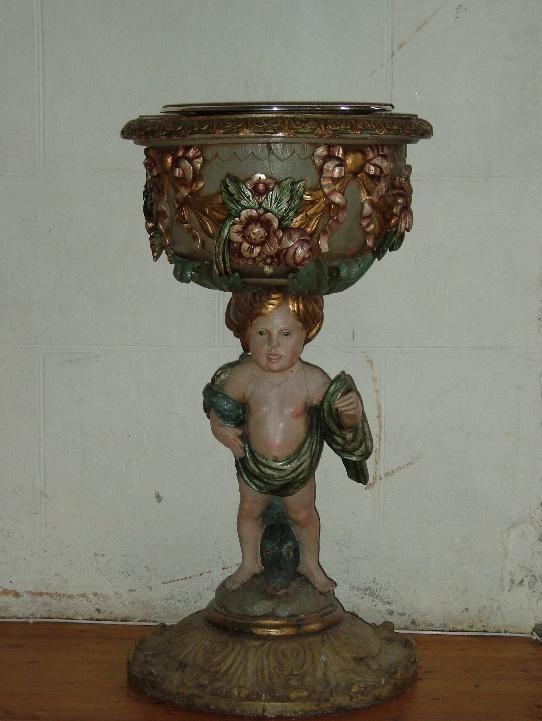
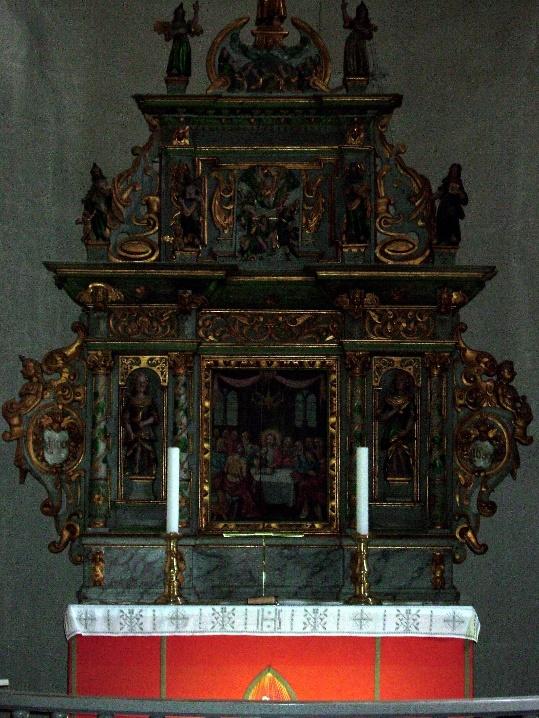


Baptismal Font from 170                                      Altarpiece from 1664


The Stabo Farm is a mile and a half west of the Hoff Church and a mile north of the town square in Lena. That is where Otto’s parents, my great-grandparents, Even Jacobsen Fodstad and Helene Hansdatter Sundbye, lived and worked during Otto’s childhood. They were hearty people, raising eight children while they worked on the farm. They probably walked to church for religious and social events. Helene lived to be 101. It was here that Otto learned to play the accordion well enough that his older brothers took him to surrounding towns and farms to play for dances. 
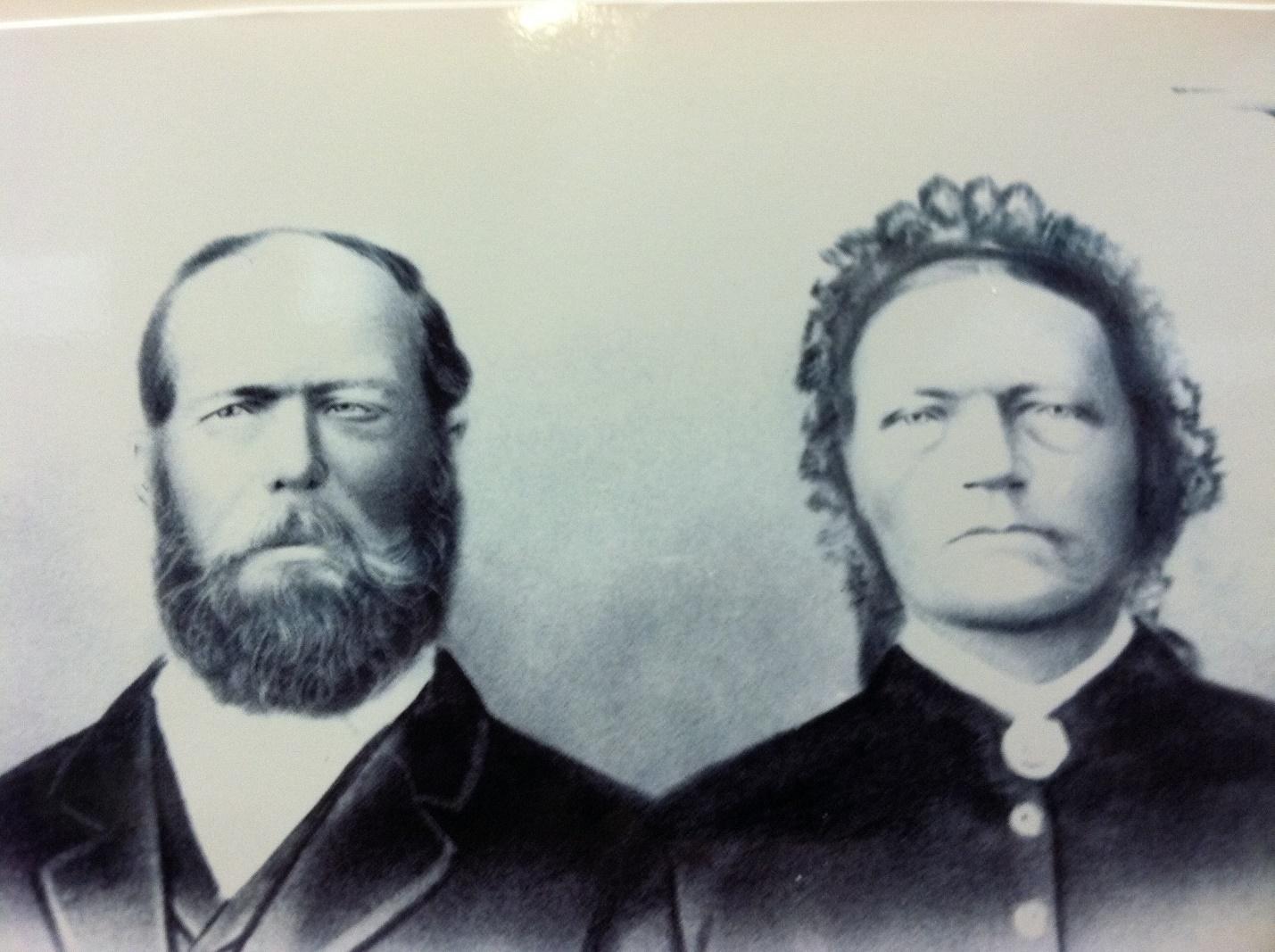

Photo Even J Fodstad and Helene H. Sundbye, my great grandparents


The farm is down a tree-lined lane directly off Slettavegen, a main road going into Lena. The farm has a white farmhouse centrally located in a ring of stables, barns and outbuildings. 

On the front lawn of the Stabo farmhouse was a stone obelisk, all wrapped in plastic. Ole Grannum explained that it was a rune stone which local universities were studying and preparing to transport to a museum. The stone is dated to the ninth century. Cool!
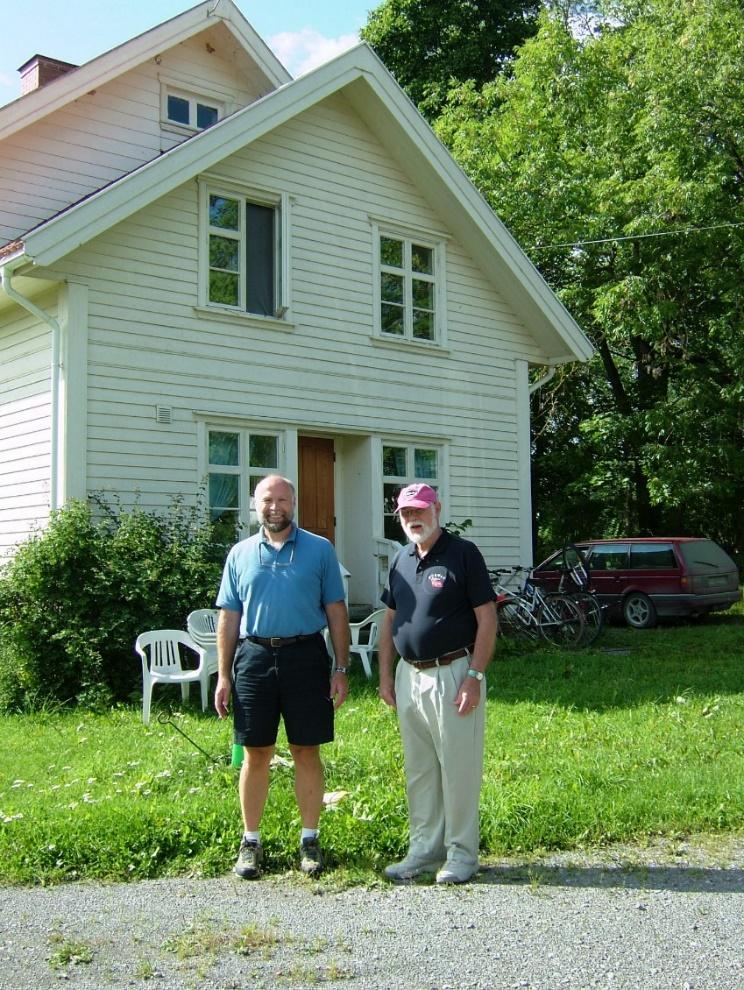

Photo Eric & Emil at side of the Stabo farmhouse


It was somewhat of a shock, however, to learn that my family did not live in the farmhouse. My great grandparents and their children lived across the farmyard in a building which included living quarters for hired help, stables for animals, and occasionally was used as a jail. Humbling news! I couldn’t help but wonder what it was like for Otto to live next to prisoners awaiting trial. 
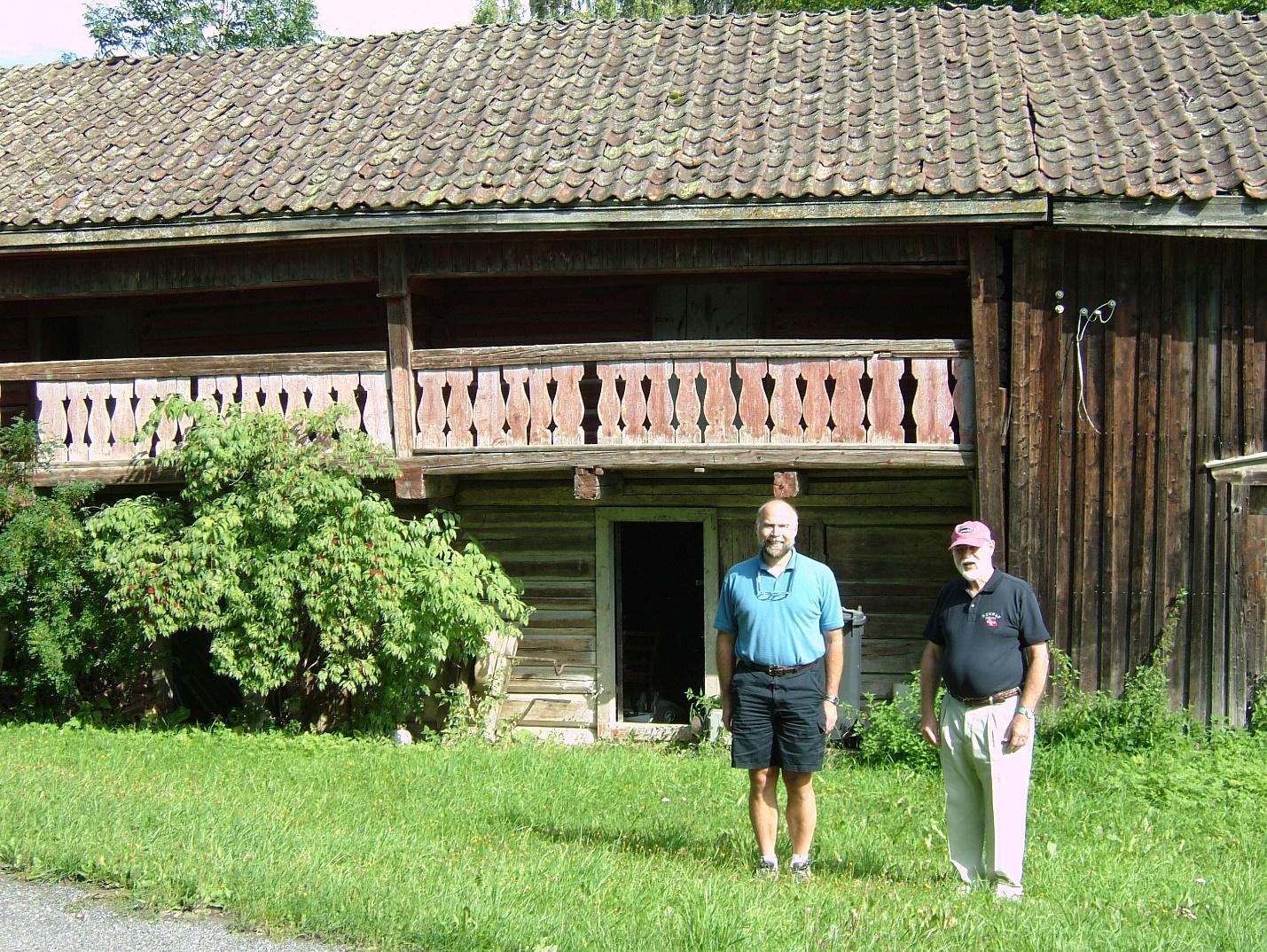

Eric & Emil in front of Otto’s living quarters


I was struck by the austere life that they must have led, concurrent with the post-Civil War era in the U.S. At that time, Norway was ruled by Sweden. Emigration from Norway to North America started in 1825 with the first mass emigration in the 1860s. That was about when Otto’s older brothers started thinking of leaving Norway. No doubt they heard of a better life here, with the potential for property ownership.


A main takeaway from my visit to Stabo Farm and the Lena area is this: If your name is Evenson and your ancestors came from Spring Grove, MN, and you’ve been tempted to buy a Family Crest of Coat of Arms, save your money! I can confidently tell you that we do not come from royalty. The only coats our ancestors had were to save them from hypothermia. We come from humble stock, but I found many reasons to be proud of them. They were bold, sturdy, religious, hard-working, musical, and blessed with longevity. That is enough for me.


I am grateful for the opportunity to visit the Norwegian branch of my family and absorb the culture and history my Grandpa Otto grew up in. I’m glad Emil Jr. suggested the trip, and I’m happy I met Ole Grannum and learned some of our history straight from him. And I’m thankful that Grandpa Otto got on that ship at age 15 to come to the United States to start a new life.


Thursday, October 22, 2020

Husker Du? Part II of Otto Evenson's Restaurant

Long before "husker du?" referred to a rock band, it was a phrase used by many Scandinavians.  "Husker du?" asks... do you remember?  Although I remember my grandparents and the town of Spring Grove, I don't personally remember the restaurant. It closed before my time. Still, it has been a rich topic of conversation with family members as I've asked... husker du?  Here are some of our stories.

 Otto's business evolved over its 40-year lifetime. Below is a photo showing Otto Evenson's Cafe in the early 1900s. 


By the time my dad was four or five years old, serving as the batboy for the the Spring Grove Baseball team as seen in this photo circa 1908, you can see at least one team member and possibly several are sponsored by Otto Evenson's Restaurant. No longer a cafe, it was now a restaurant. When I imagine sewing all those letters on a shirt, I have to laugh. By current standards we might name the restaurant Otto's, or Otto's and Etta's... and the name would be embroidered or printed on by machine. Not so easy in 1908.

Anyway, that's my dad, Emil Evenson, in front of my Grandpa Otto. Otto loved sports, but especially baseball. He often listened to games on the radio and attended local games whenever he could. Fact: The first World Series was played in 1903. Baseball was big...


Spring Grove was never big, but in the early 1900's it had something of a heyday. It had a baseball team, an opera house and it also hosted Chautauqua assemblies. I was pleased to learn that Spring Grove also had it's own cartoonist, Peter J. Rosendahl, who included Otto in some of his cartoons. This one shows a Totning festival... folks from the Toten area of Norway celebrating their heritage. Otto was a Totning, and you can see him in the middle right of the cartoon, standing next to barrels labelled Flatbrød and Sur Melk.  Flatbrød is a traditional Norwegian unleavened bread that has a long history, a staple food for shepherds, peasants and Vikings. The original ingredients were barley flour, salt and water, although over time every family made their own variations on this theme. It is served with just about anything, often fish and potatoes topped with sour cream. Otto may have sold it as a light meal, or as a sweet treat with berries and sour cream or "sur melk." From what I can gather, Norwegians love milk, cream, cheese, and butter... and more is better.


Speaking of dairy products, Grandpa always served ice cream at his soda fountain and with his desserts. The grandkids loved it! Talking about ice cream brought up a story about Grandpa Otto and an ice cream salesman. In the early '40s when money was tight, the Dolly Madison ice cream supplier came to the restaurant and took pains to show Grandpa how to save money by serving a scoop of ice cream that looked full and round, but was actually hollow. Grandpa watched, becoming more and more irate as the salesman proceeded. Otto Evenson's Restaurant was known to serve a good honest meal. How dare someone suggest he cheat his customers out of a full scoop of ice cream? He couldn't stand for such a thing! Otto took the salesman by the neck... and I remember that Grandpa had big strong hands... and ushered him out of his restaurant.  No trickery! Otto would serve a full scoop!


Located at Front and Main streets in downtown La Crosse, the Dolly Madison Dairy began in 1919 as the Tri-State Ice Cream Corp., a company formed from two earlier companies.

In 1939, the company’s name became Dolly Madison, in honor of President James Madison’s wife, Dolley, who was the first person to serve ice cream in the White House. In the 1970s the company became part of Marigold Foods and later was absorbed by Kemp's.

That's my post for today. If you missed the first post about Otto's Restaurant, you can find it here.  I'll share more about Otto and the restaurant in the future. Don't miss it, I've saved some of the funniest stories just for you.


Tuesday, September 1, 2020

Velkommen til Otto Evenson's Cafe

 Meet my paternal grandparents, Otto Evenson & Henrietta Quinnell Evenson, both of Norwegian descent. Henrietta's parents emigrated from Norway to Iowa, and Henrietta was born in Iowa City in 1881.

 
Otto, his brothers, and their wives.  Otto and Henrietta are the couple in the middle.

Otto was born in 1870 on a farm near Toten, Norway. Several of his brothers had already come to the U.S., so at age 15 he left his home country, arriving in the U.S. in 1885. At first Otto tried farming or working in sawmills, but five years after he married Henrietta he started a restaurant in Spring Grove.

Otto married Henrietta in 1898

Spring Grove, Minnesota, was the first Norwegian settlement in Minnesota, located in the beautiful southeast corner of the state. Otto's establishment moved between several buildings over his 40+ years in business, the photo below pictures an early one. That's Otto in a bowler hat on the left. 


Below is a later picture, probably in a different building. You can see Henrietta in her apron, and Otto beside her. They sold candy and tobacco and other small items in the front, had a soda fountain in the middle, and tables farther back. Otto sold so much Wrigley's gum that he won two chairs and a cocoa set. 


The restaurant was open all day every day from 1904 until 1945. It became a home away from home, not just to Otto and family, but to many in the community.  Townsfolk would come in for a cup of coffee and a piece of pie, notice a loose button on a coat or shirt, and ask for a needle and thread to sew the button. And sometimes, having been supplied with needle and thread, the person might even complain that the needle was the wrong size for the task at hand.

Here's a blurb from Spring Grove: Minnesota's First Norwegian Settlement by Chad Muller:


My grandpa liked to be generous. During the depression, Otto wanted to serve a good meal for a little as possible. He offered a blue plate special of roast beef, potatoes and gravy, peas, and a scoop of ice cream for dessert. The charge was 5¢... over the years it went up to 25¢. 
Otto also had a sense of humor. When my dad, Emil, was a student at Luther College, in Decorah, IA, he would bring friends back to dinner at the restaurant. Otto would get out all the hats he could find (I assume both men's and women's) and put them on one after another, improvising a persona with each one and causing much hilarity.  The teachers in town often ate at Otto's, and he once got them laughing so hard that a teacher had to step outside and catch her breath before coming back to finish her meal. 
One of my brothers, being a small child at the time, was fascinated by a cigar lighter in the restaurant. If you bought a cigar, you could light it and smoke it right there! 
He remembers the Midland Jump Spark Cigar Lighter. The spark would be fascinating. 
I can't say the same for the cigar smoke.

My older siblings remember eating at the restaurant. It seems that grandparents were known for spoiling even then. Pies and ice creams were shared liberally, and jack knives were given to the boys, perhaps even before the boys were old enough for them.  

Grandpa was proud of his restaurant and the hospitality shown there. He and his family worked hard to provide good meals in a clean and inviting atmosphere. As his family grew up they all helped in the restaurant. Even when his own children got jobs of their own, he would call them at their jobs to say that he needed them at the restaurant. I don't know how that turned out, but I do know that these photos make me wish I could have seen it myself. 

I'll share more stories about Otto, Henrietta and the restaurant in days to come. Please stop back for more...

Thursday, June 25, 2020

A Father's Day memory for Poetry Friday Round-Up


I hope you had a good Father's Day. Ours was complicated by both house system and car system breakdowns. Oh well... We still got to see most of our family, and we were thankful that everyone is well. And... we met the new puppies!


Evie, above, and Moose, to the right. Both are
Australian sheep dogs.


Grandpuppies!  Aren't they CUTE!!!


Since then I've been thinking about my dad, and about poetry that was shared in our family. A sweet little nursery rhyme/finger play came to mind, and I would like to share it with you.

 My father's side of the family was Norwegian, and Daddy had a little nursery rhyme/finger play that he would play with us in Norwegian.  When I looked for the Norwegian version of this rhyme, it became obvious to me that Daddy was a using  a blend of Norwegian and English. Nonetheless, I loved Daddy's version, especially because the third line sounded so funny to me.

Knocke på dør

Peek in
Snu på knobbin
Gå bayne in


Here's an English version with actions:

Knock at the door (knock on the child's forehead)
Peek in (carefully lift child's eyelid for a peek)
Turn the knob (gentle, playful twist of the nose)
Go inside (walk fingers into the mouth)
(Obviously not up to Covid norms. Historical reference only.)
Here's me next to Daddy.

I was delighted to find an English version of this rhyme in a Nursery Rhyme book some time back, but I have since lost track of it. If you know of any print versions or other oral versions, please share.
Here's one on YouTube with an added verse: Knock at the Door.

As I was searching for information on this Norwegian rhyme, I came across the poem below which Norwegians consider their best poem over the ages.  It speaks of a beautiful dream. I especially like the last line, and thought it a good ending for today's post.


Norwegian state broadcaster NRK recently asked its listeners/viewers to select "Norway's finest poem through the ages".
The winner was the poem "Det er den draumen" ("It was a dream") by the poet Olav H.Hauge (1908-1994) .
Here follows a translation into English of the poem, which was first published in 1966.


It Was a Dream
We all carry with us this dream:
that something wonderful will happen,
that it must happen -
that time will open,
that the heart will open,
that doors will open,
that cliffs will be opened,
that springs will well forth,
that the dream will be opened,
- that we one peaceful morning will glide in -
onto a bay we had not been aware of.
-Author Olav H.Hauge

Translated for The Norway Post by Rolleiv Solholm, Chief Editor. To be honest, I'm confused by this translation. The verb "to be" is used in the present tense in the title, so I would think it should be: It Is a Dream. But.. I dare not override his translation. Maybe he had his reasons.
Thanks for reading a bit about my heritage. I'd love for you to share something of yours in the comment section.


It is my pleasure to host the Poetry Friday gathering today. Please leave your links in the comment section and I will round them up as I can during the day.

1. Little Willow posts an Emily Dickinson poem at https://slayground.livejournal.com/906899.html

2. Molly Hogan shares some recent poems at https://nixthecomfortzone.com/2020/06/25/pf-dark-thoughts-and-the-danger-of-denial/

3. Laura Purdy Salas shares her haiku at https://laurasalas.com/poems-for-teachers/morning-haiku-poetry-princesses-poetry-friday/

4. Michelle Kogan shares her susurrus poem at https://moreart4all.wordpress.com/2020/06/25/poetry-friday-sounds-of-susurrus-and-giraffes/

5. Janice Scully juxtaposes the ideas of injustice and susurrus at Salt City Verse.

6. Carol Varsalona wrote about a relaxing walk near the ocean at https://beyondliteracylink.blogspot.com/2020/06/wonderment.html

7. Kathryn Apel loves poetry swaps at https://katswhiskers.wordpress.com/2020/06/26/poetry-swap-from-jone-ruth

8. Linda Baie updates us and shares some Ogden Nash laughs at https://www.teacherdance.org/2020/06/poetry-friday-musings-on-our-world.html

9. Linda Mitchell shares prompts at https://awordedgewiselindamitchell.blogspot.com/

10. Check out Matt Forrest Esenwine's video for CLiF at https://wp.me/p2DEY3-2tU

11. Charles Waters makes a children's poetry submission  announcement at https://www.charleswaterspoetry.com/blog

12. Tricia wrote a triolet that combines both woods and susurrus at https://missrumphiuseffect.blogspot.com/2020/06/poetry-sisters-go-into-woods.html

13. Mary Lee Hahn tells history via cottonwood at http://readingyear.blogspot.com/2020/06/poetry-friday-sand-creek-cottonwoods.html

14. Irene Latham calls for submissions at   https://irenelatham.blogspot.com/

15. Irene shares a poem from her red collection at https://irenelatham.blogspot.com/2020/06/artspeak-red-girl-who-reads-poem.html

16. Margaret Simon shares poetry swaps and two drafts at https://reflectionsontheteche.com/2020/06/26/poetry-friday-prompts-gifts-and-poems/

17. Elaine Magliari posts a poem by her granddaughter at http://wildrosereader.blogspot.com/2020/06/my-cat-rudy.html

18. SaraLewisHolmes shares a mouthwatering poem at https://saralewisholmes.blogspot.com/2020/06/poetry-friday-susurrus-of-heated-talk.html?showComment=1593182902342#c8147522597988482233

19. Liz Scanlon Garton retells an old favorite at https://lizgartonscanlon.com/2020/06/poetry-project-june-2020/

20. Rose Cappelli writes about a treasure from nature at https://imaginethepossibilitiesblog.wordpress.com/2020/06/26/poetry-friday-a-small-miracle/comment-page-1/#comment-9894

21. AmyVanDerwater shares a poem about a concert to plants at http://www.poemfarm.amylv.com/2020/06/gran-teatre-del-liceu.html

22. Joyce Ray shares her poem of Covid's passing at https://joyceray.blogspot.com/2020/06/after-edna-st-vincent-millay.html

23. Ruth posts about the desert of quarantine at https://thereisnosuchthingasagodforsakentown.blogspot.com/2020/06/poetry-friday-deserts.html

24. Tanita Davis writes of the welcome woods at http://tanitasdavis.com/wp/?p=10474

25. Carol shares a chartreuse poem at http://theapplesinmyorchard.com/2020/06/26/poetry-friday-chartreuse-another-color-poem/

26. Susan Bruck shares poems and insight into parenting at https://www.soulblossomliving.com/the-conscious-parenting-journey-in-poetry/

27. Fran Haley shares her echo line poem at https://litbitsandpieces.com/2020/06/23/im-the-one-who-leaps/

28.  Find a poem of summer memories at https://mhshee1104.wordpress.com/2020/06/28/childhood/